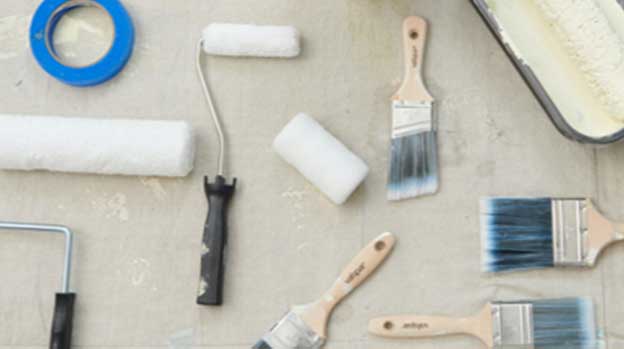
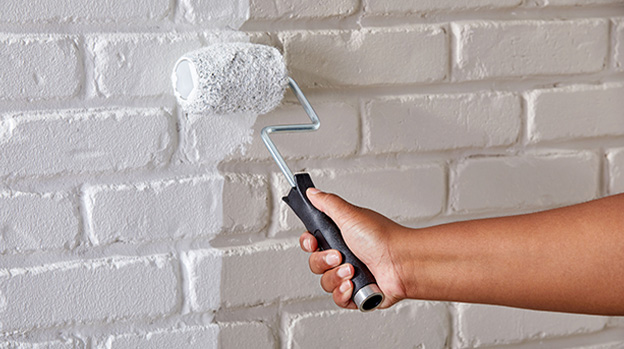
More painting to do tomorrow with the same color? You don’t have to clean brushes and rollers when you take a break. Wrap them in sealed plastic to stay moist until you are ready to paint again.
TIP: If paint has hardened on the handle or along the edge of the bristles, soften it with warm water so you can remove it before you begin to paint. Make sure you dry the brush before you dip it.
Project finished? Don’t throw away the brushes. With proper cleaning and storage, good painting tools can be reused many times. Reusing them saves you time and money and also helps the environment, because you’re generating less waste.
Cleaning Paintbrushes
To remove excess paint, scrape the tool thoroughly or wipe it across cardboard or newspaper.
If you used latex paint, remove the excess paint in a bucket or container while the paint is still wet. It is much more difficult to remove dried paint with soap and water—if necessary, use a brush comb to remove it. Wash off the remaining paint under running water.
Oil-based paints should be removed in a bucket or container with mineral spirits (petroleum distillate), rinsed in tap water and then washed with soapy water. Rinse the brush until the water runs clear. Check the label of oil-based products for the following spontaneous combustion warning and dispose of materials properly.
DANGER: Rags, steel wool, sanding dust or waste soaked with oil-based products may spontaneously catch fire if improperly discarded. Immediately after each use, place rags, steel wool, sanding dust or waste in a sealed, water-filled metal container.
Moist paintbrushes can be wrapped in wax paper and sealed with a rubber band or aluminum foil to retain their shape. Hang the brush by the handle to maintain straight bristles and proper shape.
Storing Paint
An important step in planning your painting job is determining how you are going to store or dispose of your paint when your project is completed. You’ll want to protect your immediate environment and heed any local ordinances.
Valspar offers a number of easy and earth-friendly answers to the question, “What do I do with the leftover paint?”
Use It Up
If usable latex paint is left over after the project is finished, you can:
- Use it for touching up your work, or store it away for future fixes.
- Mix small amounts of paint together and use it as an undercoat for future jobs.
- Donate paint to charities (for example, Habitat for Humanity), church groups, community groups, theater groups, schools or to your neighbor.
- Contact your local recycling center to see if the cans and lids can be recycled.
Never place liquid paint in the trash or pour it down the drain.
Store It
Prepare your paint for storage: Label the paint can lid with the color and location where the paint was used. To properly store your paint, make sure you tightly seal the can. First, wipe away any excess paint from the rim. Then cover the can opening with plastic wrap. Put the lid securely in place and tap it down with a mallet. Store the can upside down. If the can is leaking, place it in a leak-proof container.
Store paint where temperatures are moderate. Temperature extremes can negatively affect paint and make it unusable. Never allow paint to freeze.
Quick reference your stored cans by brushing a small amount of paint onto the outside surface (body of can or lid) and writing the color name and number in permanent ink. You can also identify the room or wall that was painted with that color.
You may also want to create and save a file on your computer of the paints you have placed in storage; that way, if someone tosses it by mistake, you still have the information at your fingertips.
Keep paint in a safe location, away from children and pets.
Paint Disposal
Proper paint disposal contributes to a more efficient use of our landfills and, ultimately, safer groundwater and soil. We recommend the following tips:
- Check local ordinances and waste hauler regulations.
- Read paint can instructions for proper disposal.
- Get rid of properly dried latex in your regular household trash; however
- Cans with leftover paint should be left open so the paint
dries before disposing; make sure you place the drying cans in a
well ventilated area. Cans with less than a quarter of the paint remaining
will require a few days of drying time; cans with larger amounts will take
longer, about a week. You can also add shredded newspaper, sand, sawdust,
cat litter or solidifier to the paint, which will absorb the excess paint. These
materials also work well in stopping paint spills from spreading on most surfaces.
- Another solution is to punch holes in the top of the can and then place it in a dry area for a couple of weeks.
- When the cans are ready to be thrown out, make sure the lids have been removed to let waste haulers know the paint is dry.
NOTE: Oil-based paints, varnish or paint thinners are considered hazardous waste. Check with your municipality about any local ordinances and read label instructions before disposal—another good reason why you never want to spill paint on the back of your paint can label. Only dispose through your locally designated household hazardous waste program.
To locate a recycling facility in your area, you can visit earth911.com and search their database. They also offer a toll-free, bilingual resource at 1-800-Cleanup.
Recycling
The Valspar Corporation takes environmental sustainability and responsibility seriously. For instance, we’re doing our part both in how we formulate and how we manufacture our paints. Valspar paint and primer products display the Clean Air Formula™ logo, which means they are low odor and low VOC. Low VOC denotes less than 50 grams of VOC per liter. Our architectural paints meet or exceed national, state and local ordinances for low VOC in consumer products.
In addition, we have saved over a million gallons of water usage in our latex plant operations through optimization and reuse programs.
Visit our information-based website, http://valsparearthsense.com, for earth-friendly ideas on how, together, we can help make the planet a better place.